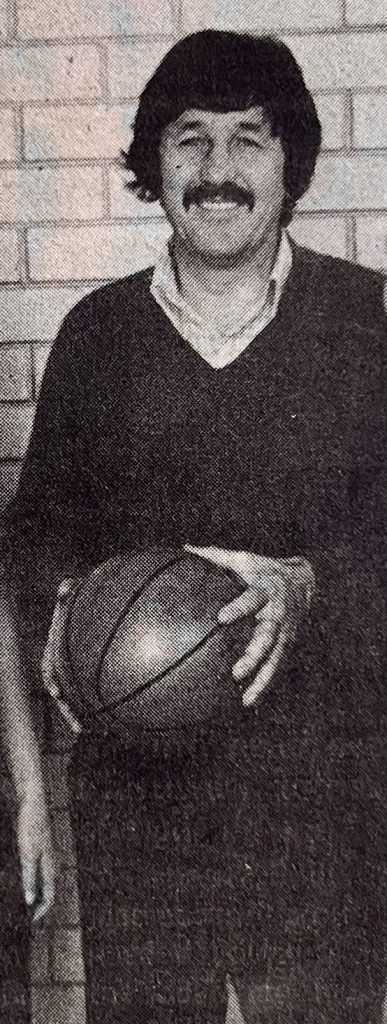
Richard ‘Dick’ Butler
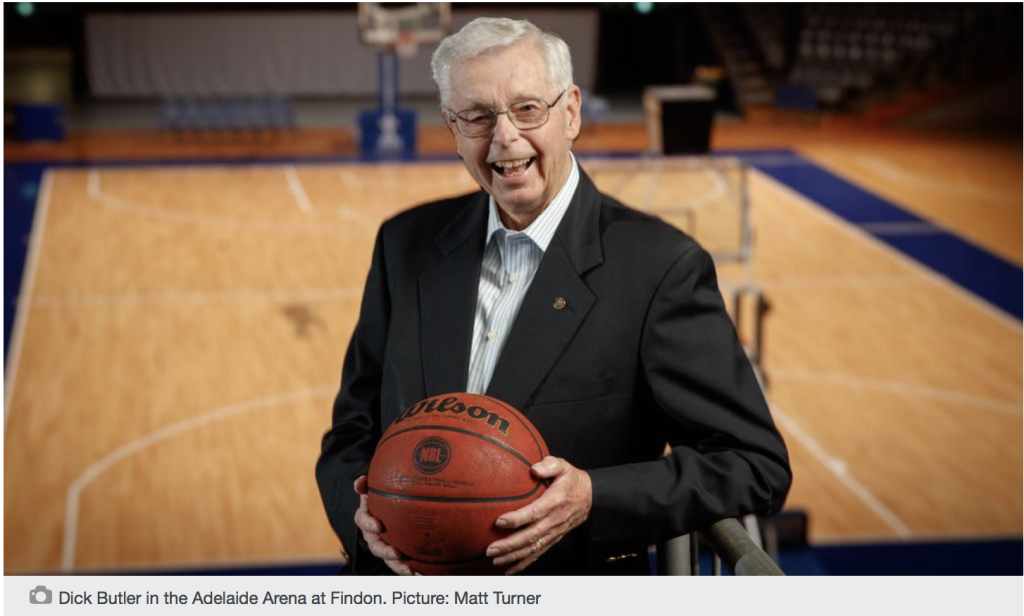
Richard ‘Dick’ Butler began his journey with the Basketball community with Forestville Eagles as the Junior Coordinator where he committed 12 years. Dick worked tirelessly in this role throughout the 1970’s whilst also being a member of the management committee for 10 years spanning 1972-1982.
Dick served as the team manager for South Australian teams at the National Junior Championships from 1975-1982, this led to him being named the Chair of the SA Junior Committee from 1980 to 1989. Dick’s achievements did not end at the Junior level, with him being both the Chairman and Director of the Forestville Eagles as they ventured into the NBL. Dick went on to become the founding Chairman of the Adelaide 36ers when they joined the NBL in 1982. Dick’s contributions and commitment to the 36ers has led to him being recognised as a life member for the organisation.
Dick’s roles within the NBL continued to grow and develop with him commending as an Executive Member from 1984-1986 and Director 1980 – 1997. Dick also continued to take on roles within Basketball South Australia becoming President in the late 1980’s. Dick went on to be recognised as a Basketball South Australia life member also. Whilst serving as President of Basketball South Australia, Dick was also named the President of Basketball Australia to which he held presidency for 10 years.
Dick has reached a phenomenal level of achievement in the Junior space, being the President of the Australian Junior Basketball Council from 1981-1986. Dick was a team leader for 12 junior and senior World Championships competing between 1983-1999. Dick saw his achievements extend to being the Director of International in 1999-2000 as well as being in the role of the CEO from 1997-1999.
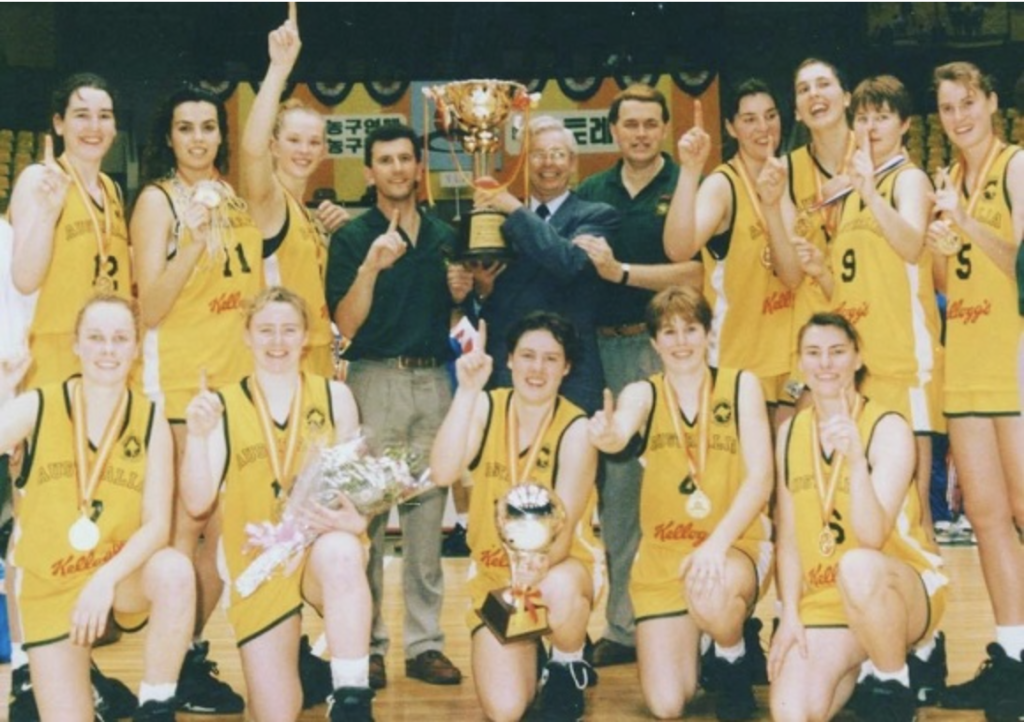
Dick advocated for gender equality within sport and pushed for the development and competition for all. Being frustrated by the lack of junior National championships for girls, Dick set about introducing under 14 and under 20 age groups for females, laying the foundation for women in the sport in South Australia for years to come. In 1994 Dick was the Chairman of Organising Committee for the Women’s World Championships.
Dick’s work with FIBA during the 1980s and 1990s further highlighted his commitment to advancing the sport through the development of competitions, players, and inclusivity.
In 1996, Dick earned his life membership from Basketball Australia, recognising his substantial contributions to the sport as a senior executive and administrator. Another remarkable accomplishment, reflecting his unwavering commitment to South Australian Basketball, occurred in 2020 when Dick was bestowed with the AM (Member of the Order of Australia in the General Division) for his noteworthy service as a senior executive and administrator in basketball, along with his advocacy for gender equality in both development and competition.
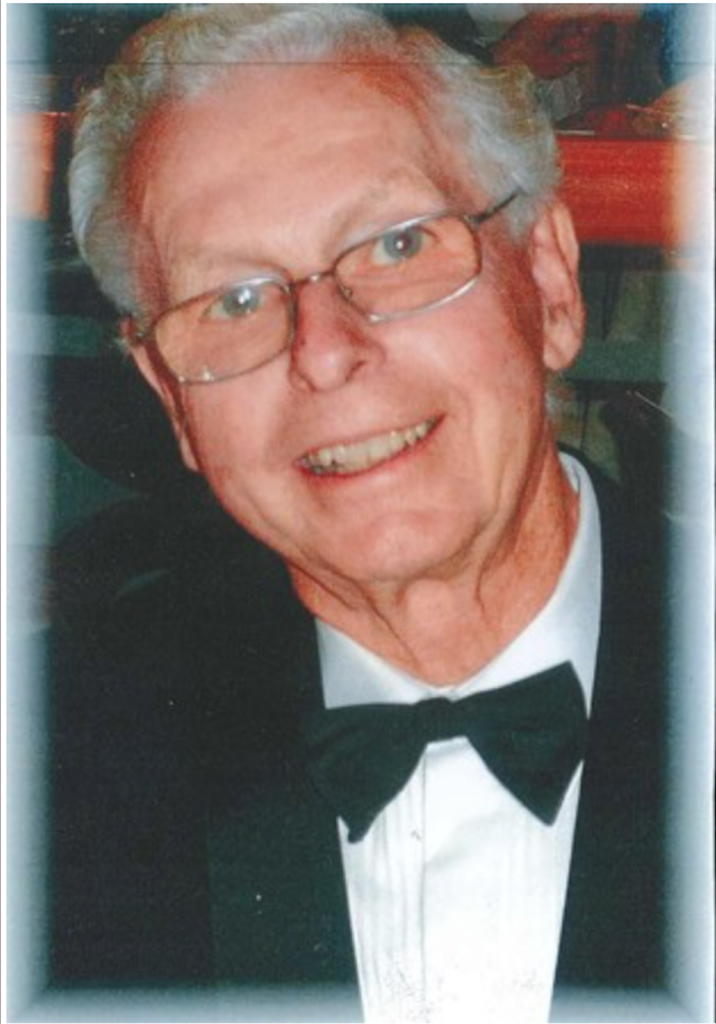
Malcolm Heard
The late Malcolm Heard commenced his basketball journey in the 1950’s working hard to reach state and national teams. Malcolm was a very humble, peaceful, and caring man that carried himself in a way that earnt respect from others throughout his career in Basketball.
Malcolm played basketball for OBI in 1954 to 1959 in the SA Basketball League. Malcolm worked extensively on his skills in this time, being recognised as the Most Improved Player in 1954. The team then took out the League Championship in 1956.
Malcolm saw his time as a state player commence in 1955, attending various Australian championships as a state player for an impressive 12 years ending his time with this squad in 1967.
Malcolm’s success at a state level saw his talent be recognised with him reaching a new height representing the Australian team in 1960. Malcolm reached a rare achievement in 1960 representing Australia alongside his brother John Heard for the Olympic Qualifications. Malcolm returned to the Olympic space in 2000 participating in the torch relay at the Sydney Olympics.
Malcolm played Basketball for Australia in Bologna, Italy for a qualification Tournament, then again in 1962 at the World Championships in Manila, Philippines.
Malcolm continued playing at the State and District level for 10 years at United Church and Sturt. Joining the district team in 1960, Malcolm showed why he had reached the successful levels he had in his career. Malcolm won back-to-back Woollacott Medal awards in 1964 and 65. This award is presented to the player recognised as the Best and Fairest in the league for that year.
United Church (now Sturt Basketball Club) had a successful 1970 season with Malcolm participating as a player coach and leading the team to a summer premiership in the opening season at the new Apollo Stadium.
Outside of his playing and coaching achievements Malcolm also actively participated in the referee space for basketball for over 20 years, and eventually used his knowledge and experience as a referee to go on to coach and train other referees for SACBOA.
Malcolm’s extensive knowledge of so many aspects of Basketball lead to him being the President of Sturt Basketball Club and SACBA, as well as the Vice President of SACBOA. Malcolm also served as a committee member and president of the SA Olympians Club and was a member of SA Olympic Council.
Malcolm’s career spanned playing at a state, national and international level, decades of coaching and refereeing and being a voice on several sporting boards.
Malcolm’s commitment to Basketball lead to him achieving life memberships for Sturt Basketball Club , Basketball South Australia, SACBA and SACBOA.
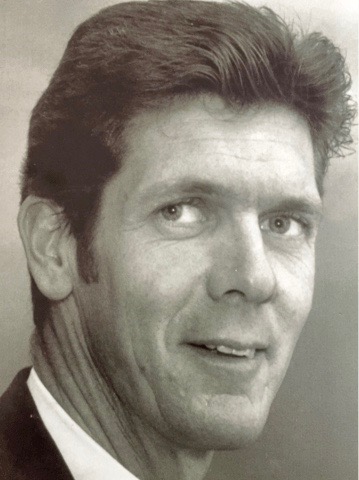
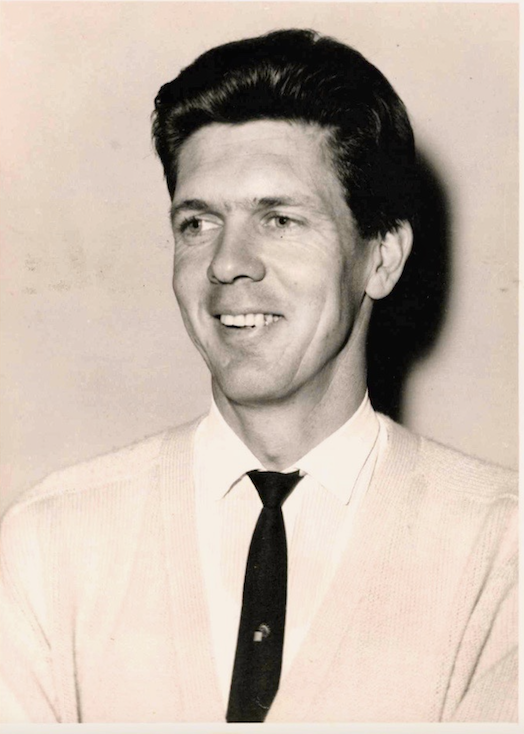
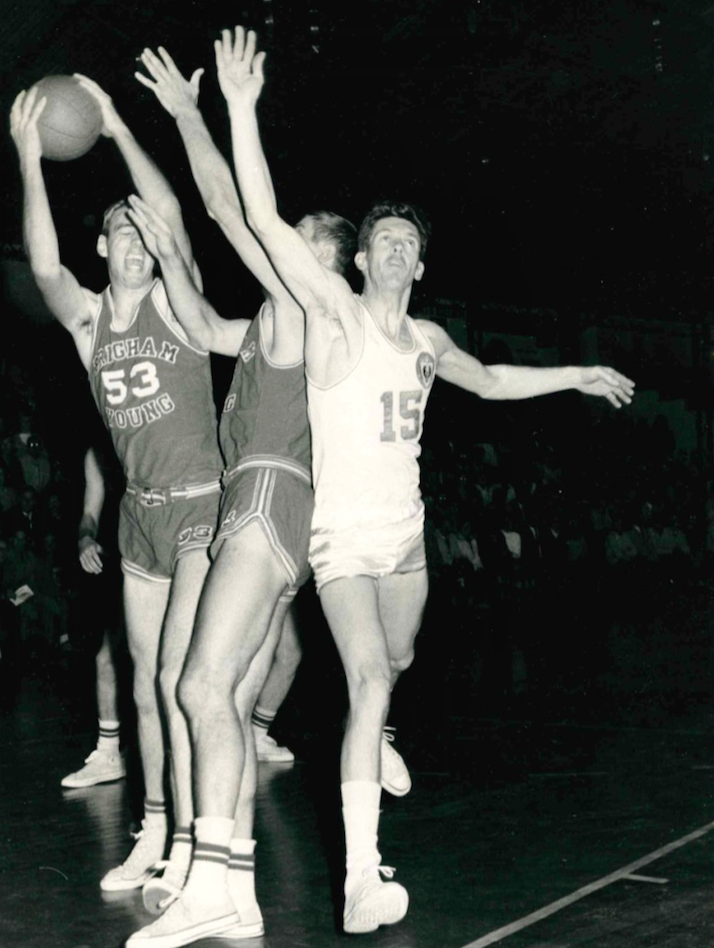
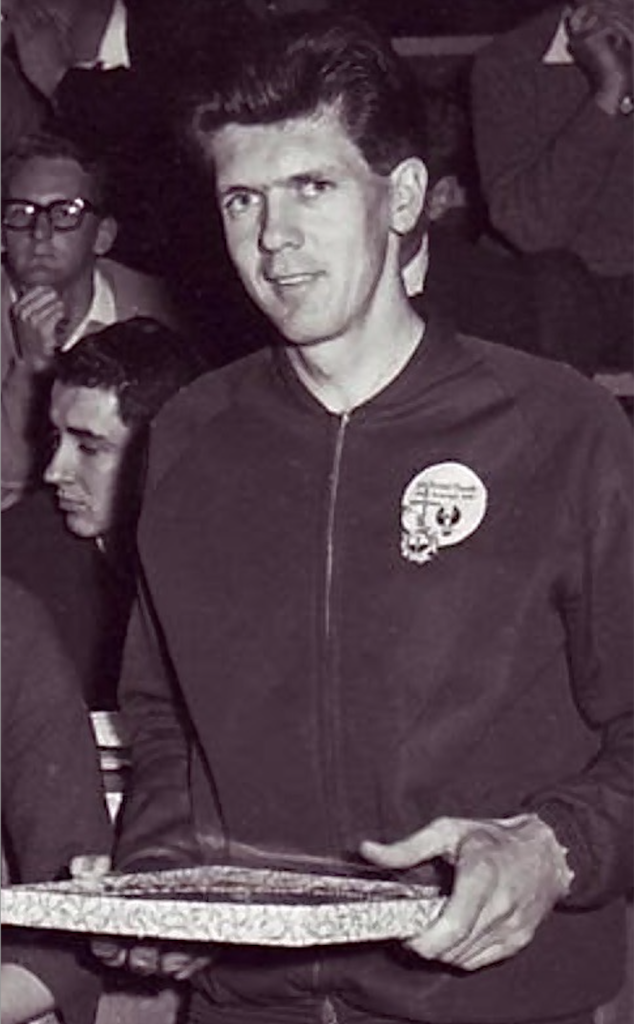
James ‘Jim’ Madigan commenced his basketball journey in 1957 as a District player for YMCA, South Adelaide. Jim quickly transitioned from his role as a player into coaching where he truly built his path to success.
Jim became very active in the development of players in the early 60’s coaching Juniors, Senior Women’s, and Men’s competitions. From 1963 to 1968, Jim expertly managed multiple teams concurrently, coaching the Men of YMCA, West Torrens, and Central. Furthermore, his coaching prowess extended from 1968 to 1985 as he led the Women’s South Adelaide team at the district level. Jim’s district level coaching achieved phenomenal results winning premierships in 1966, 1972, 1973, 1984 and 1985. The coaching success continued for Jim winning the title of club champions in West Torrens of 1973.
Jim’s coaching journey has spanned across diverse teams and skill levels, marked by a notable accomplishment of leading the St Clair Women v South Korea and the St Clair Men on a successful USA Tour. His coaching ability has produced exceptional outcomes, not only in terms of team achievements but also in the remarkable development of individual players.
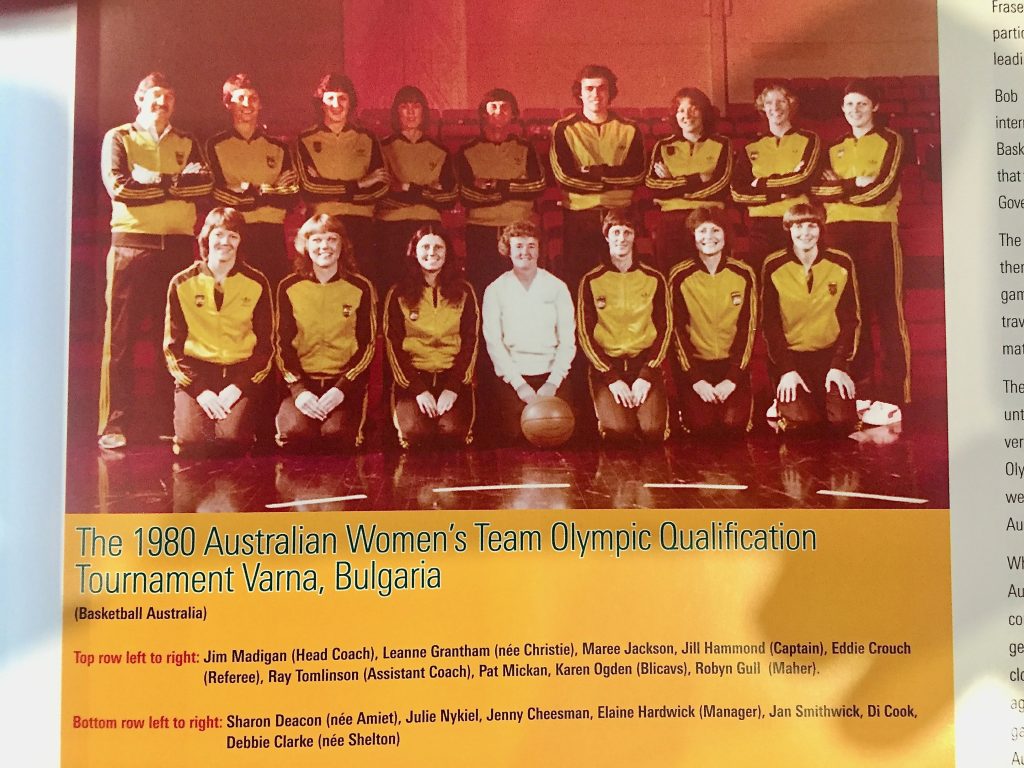
Jim coached the State Women’s team to 3 junior titles and took on a role coaching the Australian Women’s Team (now known as the Opals) from 1973-1978.
Jim travelled to the USA funded by Basketball Australia in the 70’s. On his trip to the USA, he had the opportunity to study techniques that were utilised for progressing female basketballers. The trip saw Jim visit UCLA, Baton Rouge, Washington DC and Oregon.
International success and experience didn’t end for Jim in the training and development opportunities he pursued. Jim was part of two China tours, a Japan tour and a Europe tour within his coaching career. 1974 saw Jim coaching at the Oceania Championships held in Australia, then the World Championships in Columbia in 1975. Jim also travelled as part of the Pre Olympic Tournament in Bulgaria to continue his journey in coaching.
Jim has had a phenomenal coaching journey and has achieved Life Membership status at Forestville Basketball Club (Formerly West Torrens Basketball Club) and Basketball South Australia.
CAROLYN TSAKALOS
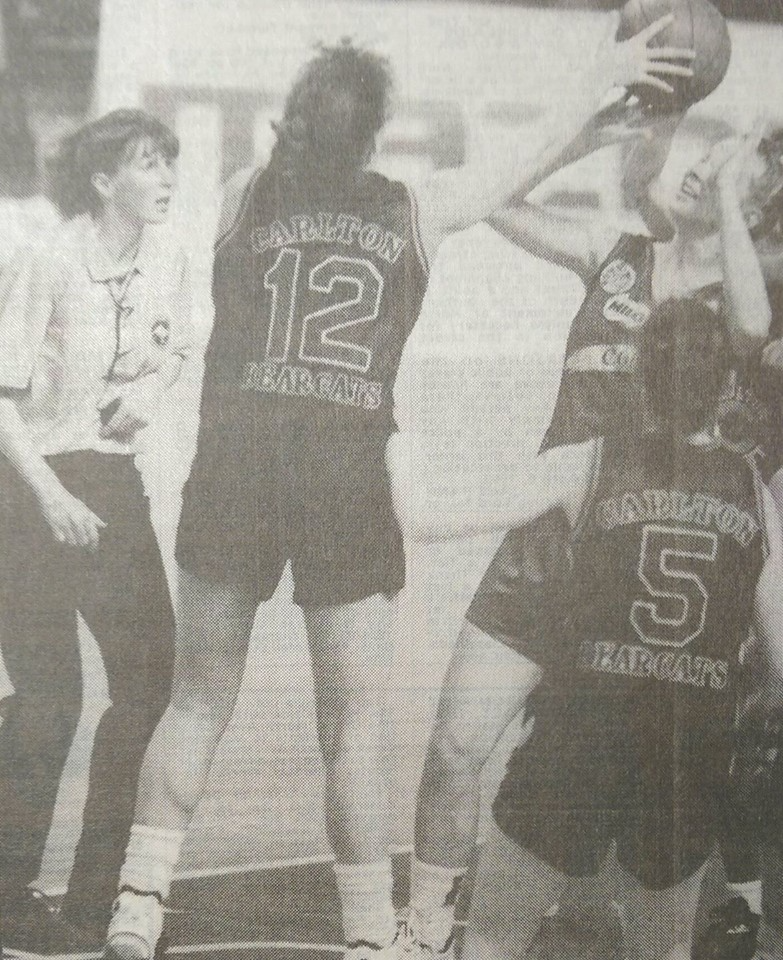
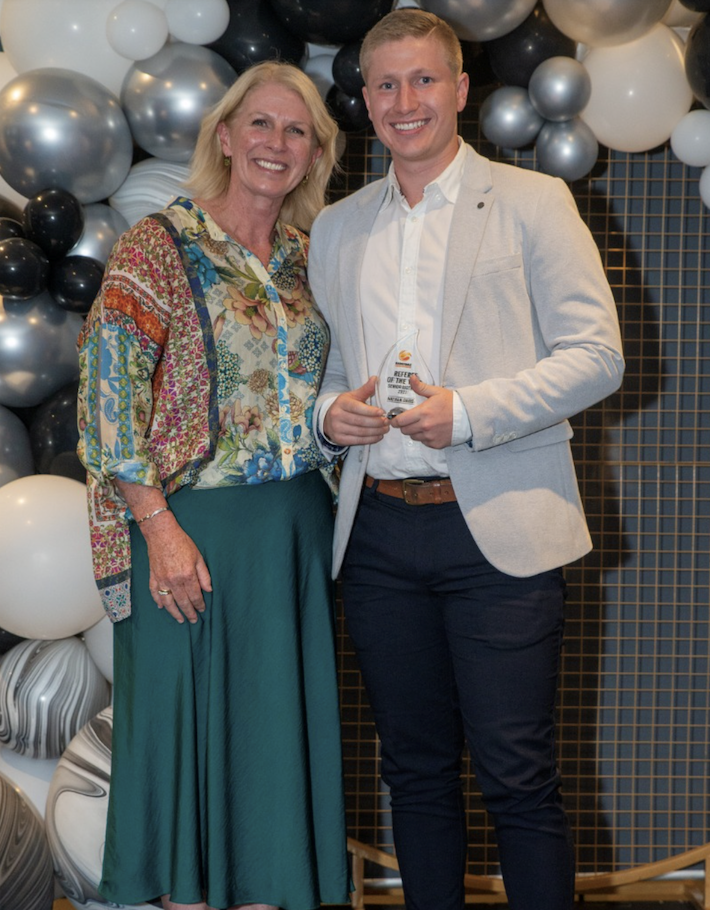
Carolyn commenced her journey as a referee at the young age of 14 years old. In a space of predominantly male’s, Carolyn lead the way for female referees proving that with work ethic and drive there is enormous potential.
Carolyn has produced groundbreaking results for women officials within organisations including Basketball South Australia, WNBL, NBL and FIBA.
1988 saw Carolyn’s first major Australian representation at the Pro Ball Invitations Basketball tournament leading to a long list of high-level officiating experiences.
Carolyn had an exciting 1993 refereeing the China tour with the Australian Women’s Team and receiving FIBA badge accreditation in the same year.
The FIBA journey for Carolyn grew extensively after the accreditation was achieved. Carloyn refereed 4 games at the FIBA Junior Women’s World Champions in Brazil in 1997, 8 games including the Gold Medal games at the FIBA Women’s World Championships in Germany in 1998 and making a to FIBA in 2004 and 2006 traveling to both Russia and China refereeing Gold Medal games at both FIBA Women’s World League events.
Carolyn refereed in the Asian Tour with Australian Women’s Team in 1995. In the same year Carolyn refereed the Ocean Junior Women’s Championship and joined the Australian Women’s Team in France and Ukraine for the European Tour, joining the tour again in 1998.
In 1997 Carolyn had the rare and phenomenal opportunity to referee five games in Utah at the NBA Pro Summer Camp.
Carolyn was awarded the Australian Junior Official of the Year in 1997 and went to her successful career to be awarded the Australian Official of the Year in 1998.
The years that followed Carolyn continued to reach new heights in her refereeing journey. Refereeing 15 games in the WNBA and 6 games in the Asian Junior Women’s World Championships in 1998. In 1999 Carolyn joined the Australian Women’s Team for both the Cuba and Brazil Series’.
Carolyn reached new heights with her Olympic debut in 2000, refereeing the pre-Olympic Tours for the Women and as a reserve stepping into the Men’s also. Her Olympic journey saw 7 games refereed in 2000 including a Bronze Medal game. Carolyn’s Olympic journey was not set to end being selected for Athens in 2004 to which she was required to withdraw due to being pregnant.
2000’s Olympic success was not the only achievement of the year for Carolyn also refereeing the Women’s International Series against Russia, France, USA, Slovakia and Poland, as well as the World Slam Down Under in Sydney.
Carolyn was awarded the Australian Sport’s Medal; this prestigious medal was awarded by the Queen in 2000.
The Opal Women’s World Challenge was another monumental step in Carolyn’s journey, joining them in 2004. Carolyn travelled to New Zealand and was part of the Oceania World Qualifiers 2005. Returning to the Opals in 2006.
Carolyn rounded out her major Australian representation with the 2006 Asian Championships in Japan refereeing the Gold Medal Game and finishing with the Commonwealth Games in Melbourne 2006 where she refereed 5 games and finished with the Bronze Medal Game.
The late Fred Specht may well be regarded by some as the man who put the West Adelaide Basketball Club on the map. But he was much more than that. Beginning as the Kingston Tennis club it later morphed into the West Adelaide Basketball Club.
Initially, with his nephew Dixon (Dick) Bruning, he formed the Kingston Men’s Basketball Club (KMBC) in 1940’s on the Specht’s family-owned Kingston Tennis Club property on Kingston Ave, Richmond. The tennis club was well established with a club house and five outdoor courts but in winter the courts were often too wet to play. It was during one of these periods that Fred Specht, together with his nephew Dixon Bruning, decided they should investigate the game of Men’s Basketball and they visited the Duncan Building to watch the game being played. The tennis players needed something to do to fill in the time and one court was made available for the new KMBC team to practice.
In 1946 the first Kingston Men’s Basketball team was formed to play in the
SAMBA which had recently resumed playing after WW2. The first coach and president of the Kingston Men’s Basketball Club was Fred Specht. He had outstanding success guiding the men’s team to a staggering 4 championships in 5 years. In 1948 and 1949 they won the ‘A’ grade title at the OBI (Our Boys Institute) competition and more premierships in 1951, 52 at the Thebarton Town Hall. Not only was he coaching and undertaking official duties he was also using his own money to buy basketballs and to purchase and build the first wooden backboards for the club.
In 1950 the South Australian Metropolitan Basketball Association (SAMBA) and the OBI had disputes about costs which resulted in the SAMBA breaking away from the OBI to form a new Association which was named District & Metropolitan Amateur Basketball Association. To start the new association, it was decided primarily by Frank Angove, Ted Hunt, and Fred Specht to have an eight (8) team competition and each club involved in the break-away was to assume a League Football Club name. It was considered that football followers would provide increased support for the game hence the name change.
Consequently, after much heated discussion, the Kingston Basketball Club was renamed the West Adelaide Basketball Club. This name was chosen because the Kingston Tennis Club was part of the West Adelaide Football Club area and the Specht family’s allegiance to the team, being red hot supporters. Specht consequently coached WABC to 2 more premierships in DMAB competition now located at the Thebarton Town Hall.
In 1953 the ‘A’ Grade competition moved from the Thebarton Town Hall to the new Forestville Stadium. This was a milestone in Australia as it was the first stadium purpose built for basketball. Angove, Hunt, Merv Harris and Specht, four stalwarts of SA basketball had dreamed of this moment and the time when all clubs would have their own stadium. To pursue this dream, (much against his wife’s wishes) Specht and players of the time became original debenture share investors to raise the 3000 pounds needed to build the stadium. Late in that year he moved from West Adelaide to South Adelaide to further continue his coaching career as their ‘A’ grade coach. From there more coaching opportunities arose with West Torrens ‘A’ grade teams and so he moved on.
Specht is best remembered as an administrator and an official and that is no surprise given his achievements. He became the first vice-president of the DAMBA, a position he held for an amazing 25 years (1950-75), when he retired due to ill health. As a result of an increase in junior basketballers playing the game at the new Forestville Stadium, he established a junior committee to oversee its development. He became the first president of the Junior Committee and held this position from 1953-1975. He set up the junior competitions from their infancy and was considered ‘the father of junior basketball’ in those years.
Even though he coached a variety of teams, he managed even more. He managed or coached a host of U/16 and U/18 State teams during his presidency of Junior basketball in South Australia. From senior state teams at Australian Championships to touring to New Zealand with State and combined District teams in the 1960’s, nothing was too much for him.
A fact not well known is Specht also had a hand in establishing the site of the Apollo Stadium. In the late 1960’s the DAMBA were looking for land to build a new headquarters. Fred, on his daily walks around his Richmond neighbourhood, discovered an unused block of land on Kingston Avenue. On making enquiries Specht discovered the CMV motor vehicle company had intended selling it as it no longer served their purposes. He contacted his old friend Frank Angove about the site, discussions and negotiations took place between Angove and the managing director of the car company and the site was bought. The rest is history. Fred Specht loved the site as it was only 5 minutes from his house!
Fred Specht was a pioneer of basketball in South Australia. From his beginnings in the formation of one of the State’s most powerful clubs, West Adelaide, to his hard work and diligence in the building the Forestville Stadium to his countless years in managing a variety of aspects of manging junior and senior teams he will be remembered as one of the visionaries of our sport.
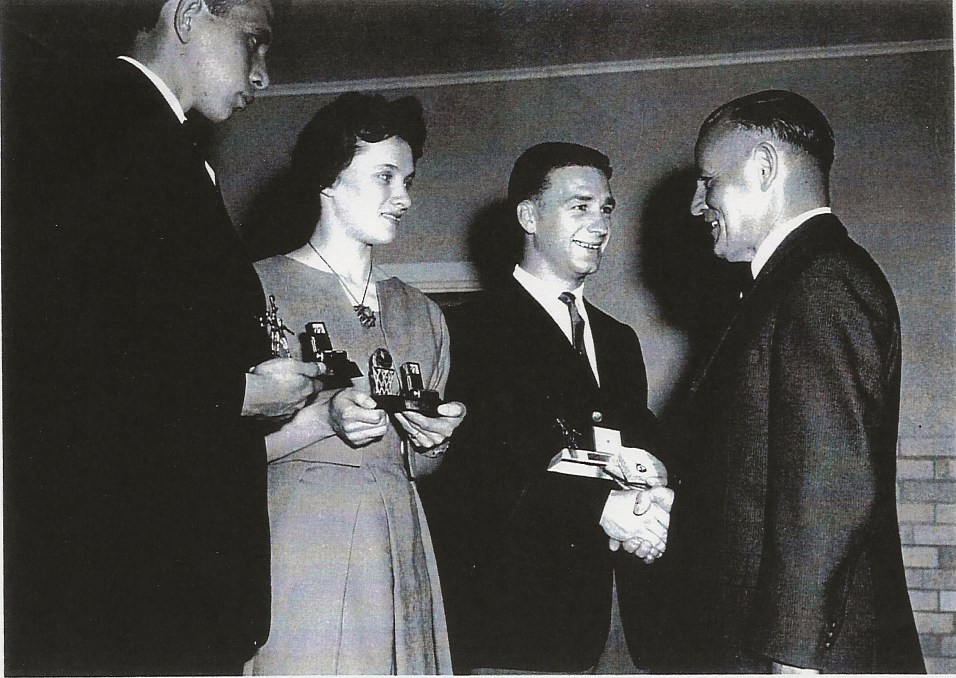
Albert Leslie
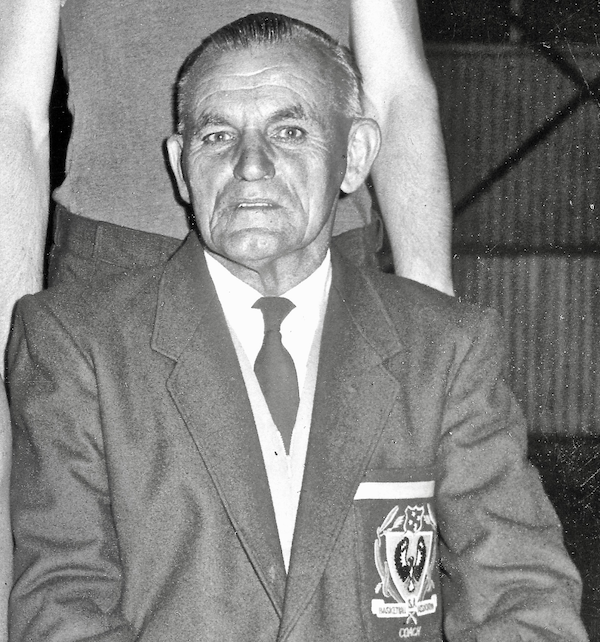
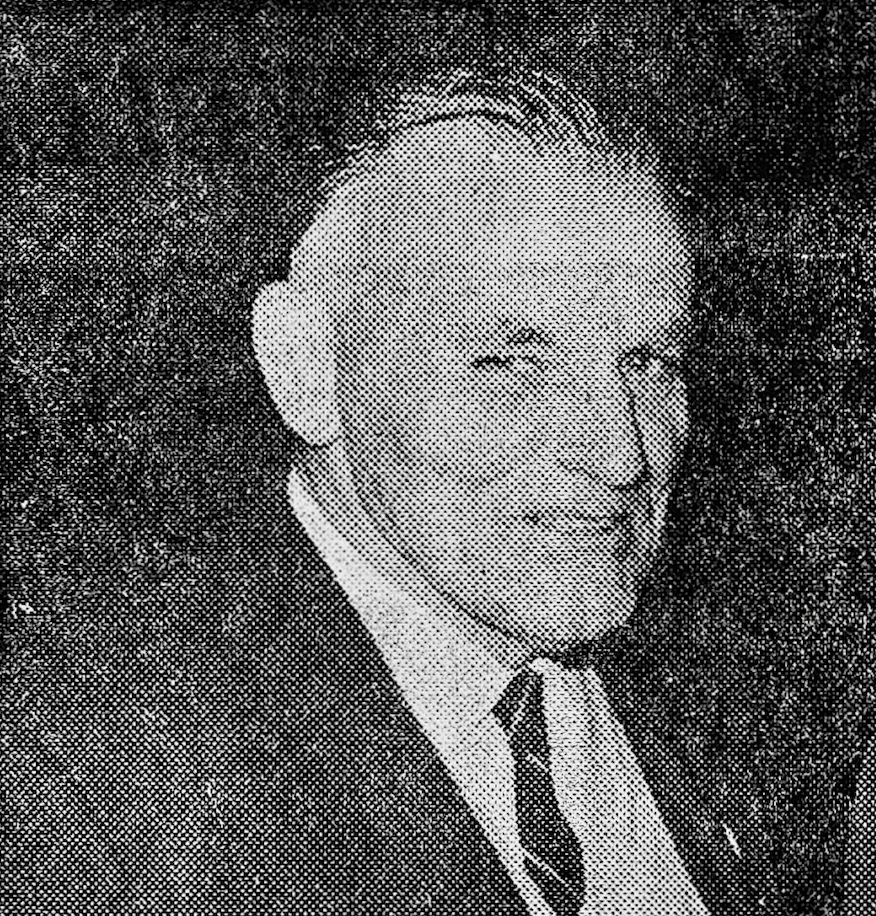
Born in Woolloomooloo, NSW Albert quickly became the pride of the town.
Starting in 1960 with the Under 16 NSW State Team, Albert continued to represent NSW consecutively until 1964 in the Senior Men’s state team. Returning for one year in 1969.
Albert made the move to South Adelaide’s Men’s team in 1965 where the team took the premiership. Albert’s success with South Australian teams continued representing the SA Senior Men’s State team in 1966 and becoming Australian Champions. Albert returned to the SA Men’s states team in 1967-68 as the Australian Runner-Ups.
Albert won the Kay’s Trophy (highest votes for U20 in the Woollacott medal, now known as the Frank Angove Award) in 1966 with his debut with United Church Men’s team. He continued with United in 1967 winning the Woollacott Medal.
1968 saw Albert make the Australian Olympic Team that went to Mexico for a pre-Olympic tournament. An incredible achievement for the young and tremendously talented player.
Albert returned to his NSW roots representing Sydney YMCA for four consecutive years in 1969, 1970, 1971 and 1972. During this time, he achieved selection in another Australian National Team this time heading to the World Championships in Yugoslavia.
The SA Men’s State Team were graced with the return of Albert in 1973 for the Philippines Tour. This tour gave the SA Men the opportunity to play against the Philippines National Team.
Forestville Eagles Men’s team carried out the final years of Alberts playing career before his venture in the coaching space.
Albert’s coaching style achieved greatness from his players. Utilising his humble demeanour, knowledge, and experience of the game he was able to get the best out of his players. As head coach Albert lead the SA Under 20 Men’s team to Championship in 1986 and stayed on with the team until 1989.
Albert’s coaching success continued with a SEBL Championship as the Head Coach of the Adelaide Buffalos. The completion of his coaching career came with Albert joining the Adelaide 36ers as their Assistant.
Outside of his playing and coaching career Albert has reach phenomenal feats becoming an Adelaide 36ers Life Member, participating in the 2000 Olympics Relay, being the first junior from Woolloomooloo to represent State’s and gain and Olympic selection. Albert is a past secretary of the Olympians club, a Basketball SA Participant Life Member and won two MVP awards as part of the Forestville Eagles.
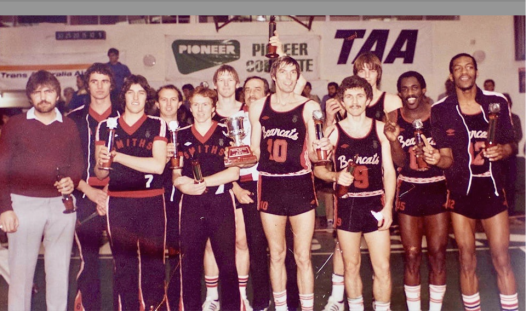
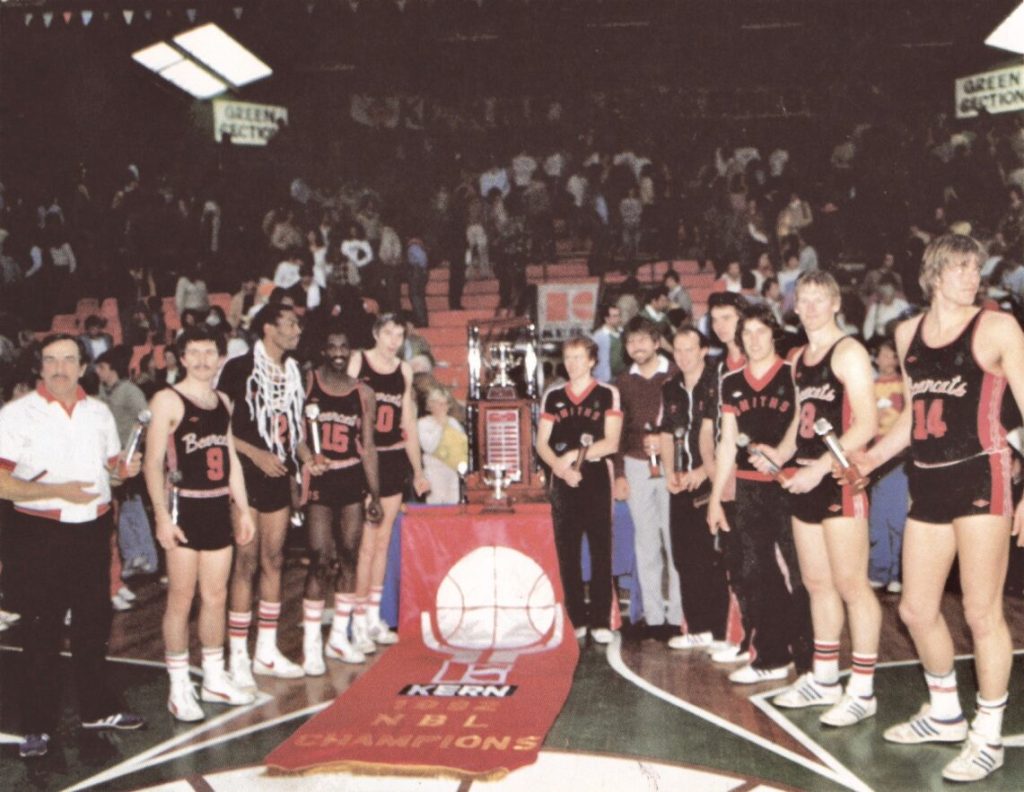
West Adelaide 1982 Mens Team
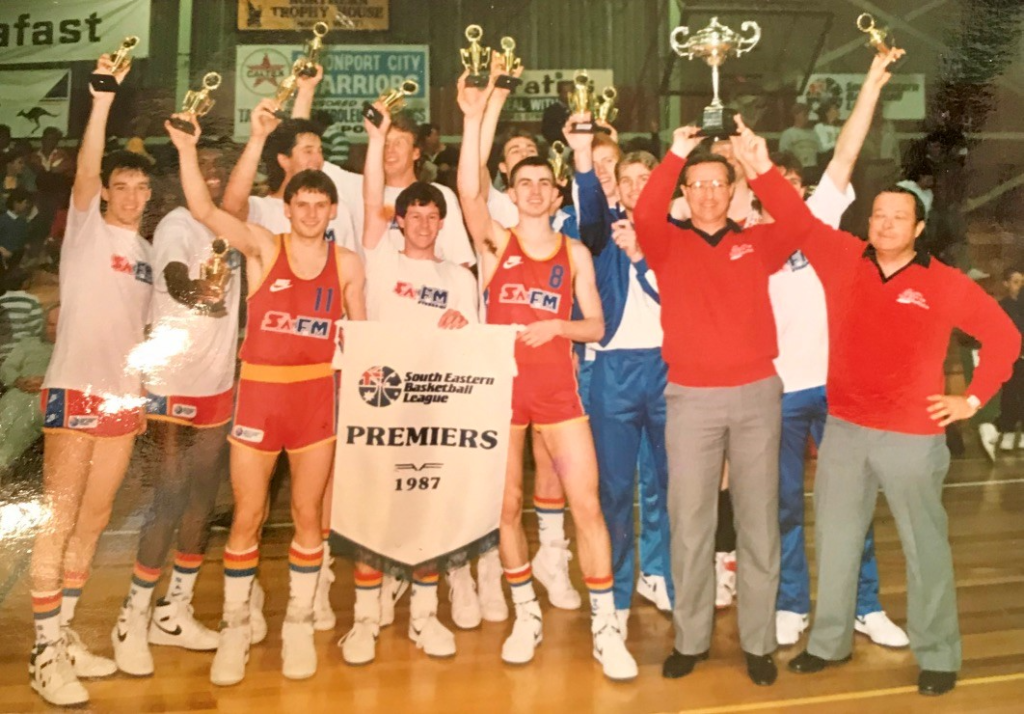
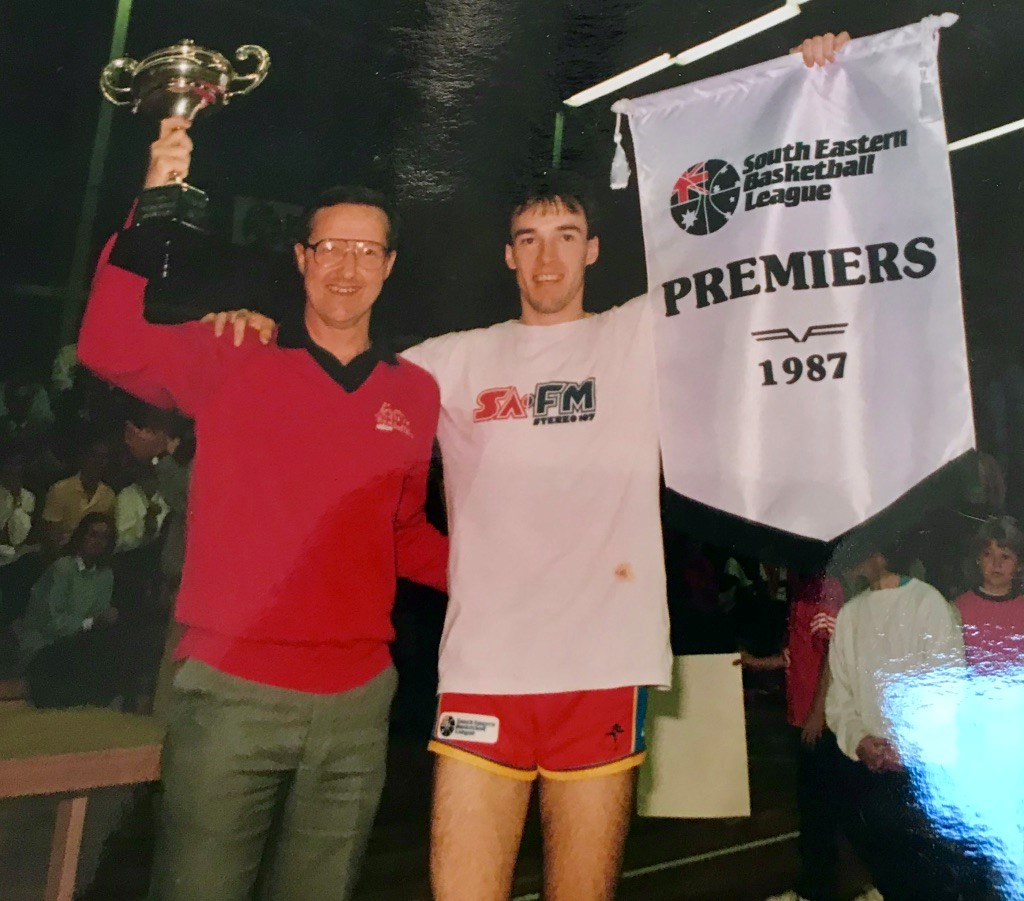
When West Adelaide Bearcats men’s team hit the hardwood in 1982, it was the culmination of five years of work that produced South Australia’s historic first national club champion.
The National Basketball League (NBL) tipped off in 1979 and the Bearcats were among its inaugural clubs, having won the SA championship in 1978. They would again go on to win in 1979, 1980, 1981 and finally, 1982 – the longest championship winning reign in South Australian basketball history.
Much of this had to do with their American-born playing-coach and inaugural NBL Most Valuable Player, Ken Richardson who arrived in Adelaide in 1974.
In 1975 he created history as the first American to claim the Woollacott Medal as the state’s fairest and most brilliant player. In his era, Richardson was the best player in Australian basketball and his decision to move from a starter’s role to West Adelaide’s sixth man was hugely influential in the Bearcats’ total domination of 1982.
A season-ending injury cost Richardson the 1981 season as a player but continued as coach, West still finished third in the NBL. In his comeback season as a player-coach in 1982, Richardson averaged 14.5ppg at 58.8% (143/243 – #2 in NBL), 6.2rpg, 1.4 apg off the bench, always able to assess what his team might be needing. For example, in the NBL playoffs he led the team in scoring with 25 points in its semi final win, then in rebounding with 11 in the Grand Final.
After losing the 1980 NBL Grand Final to St Kilda Saints and their unstoppable mercurial American guard Rocky Smith, Richardson set out to find a “Rocky of our own”. This led to the recruitment of Al Green.
Out of Louisiana State University, Green was unlike anyone Australian basketball had seen before, a scoring guard with lightning-fast reflexes, moves, skills and jumping ability. “Dr Dunkenstein” had fans filing into Apollo Stadium just to see his sizzling abilities, not to mention his penchant for trash-talk which harkened back to his New York roots. When the naturalised Richardson added Leroy Loggins to the Bearcats’ roster, it had arguably the two most accomplished imports in the NBL.
Green won the Woollacott Medal in 1982 as West Adelaide stormed to its record fifth straight SA championship, smashing Forestville Eagles 97-84 in the Grand Final.
This was West’s 17th Grand Final appearance since 1957, Green also leading the season scoring and securing a rare double by also owning the state league’s best field goal percentage.
At the other end of the floor, Loggins was busy winning the league’s Best Defensive Player award, the dynamic US duo also holding down two spots on the All Star Five (First Team).
West progressively built the irresistible force which culminated in its 1982 superiority. Two of its starters – Peter Ali and Ray Wood – both were products of the club’s junior program.
Ali in 1980 represented Australia at the Olympic Games in Moscow and was a revered defensive player. Wood won the NBL’s Best Defensive Player award twice (1980, 1981) and holds a personal milestone as the only Defensive Player award winner in the league’s history to also have produced a 40-point game. He could play both ends of the floor and was the team’s playmaking general.
Raw-boned NSW-born centre Brad Dalton completed Richardson’s starting quintet, the playing-coach’s eye for talent reinforced with Dalton winning Olympic Games selections for Australia in 1984 and 1988.
Joining Richardson on the bench were State forward and National junior rep Joe Theil and a trio of West Adelaide juniors Trevor Maddiford, Greg Mules and Peter Dawe, the latter representing Australia at Under-20 level.
This unprecedented powerhouse team was the first to include three league MVPs in Richardson, Green and Loggins. The Sydney Kings would field three league MVPs in Andrew Bogut, Kevin Lisch and Jerome Randle in 2019 but did not go on to win a championship.
Green averaged 27.3 points per game at an NBL-leading 59.1 per cent accuracy. The second most accurate player in the NBL was Richardson at 58.8 per cent. Third was Loggins, whose 25.2 ppg were delivered at 56.9 per cent – another yet-to-be repeated feat.
The Bearcats trio also all won Woollacott Medals in SA.
In its dominant NBL season, where run-and-gun backed by amazing defensive commitment but highlighted by touchdown passes out of defence for lay-ups were a regular component. West Adelaide produced a 21-5 win-loss record, an 81% success rate, and averaged 97.1ppg, conceding 83.7ppg, a winning differential of 13.4ppg. Two of its five losses were by one point and a third by two.
Loggins, with a 32-point tour de force, was named MVP of the Grand Final victory over Geelong.
Richardson was assisted by bench coach Mike DeGaris and team manager Keith Woods, completing one of the greatest teams in NBL and SA history – worthy inductees into the Basketball SA Hall of Fame in the “Teams” category.
The 1982 West Adelaide Bearcats consisted of:
Playing Coach, Ken Richardson (dec)
Assistant Coach, Mike Degaris (dec)
Al Green
Leroy Loggins
Peter Ali
Brad Dalton
Ray Wood
Trevor Maddiford
Greg Mules
Peter Dawe
Joel Theil
Garry Thompson
Manager/Trainer, Keith Woods
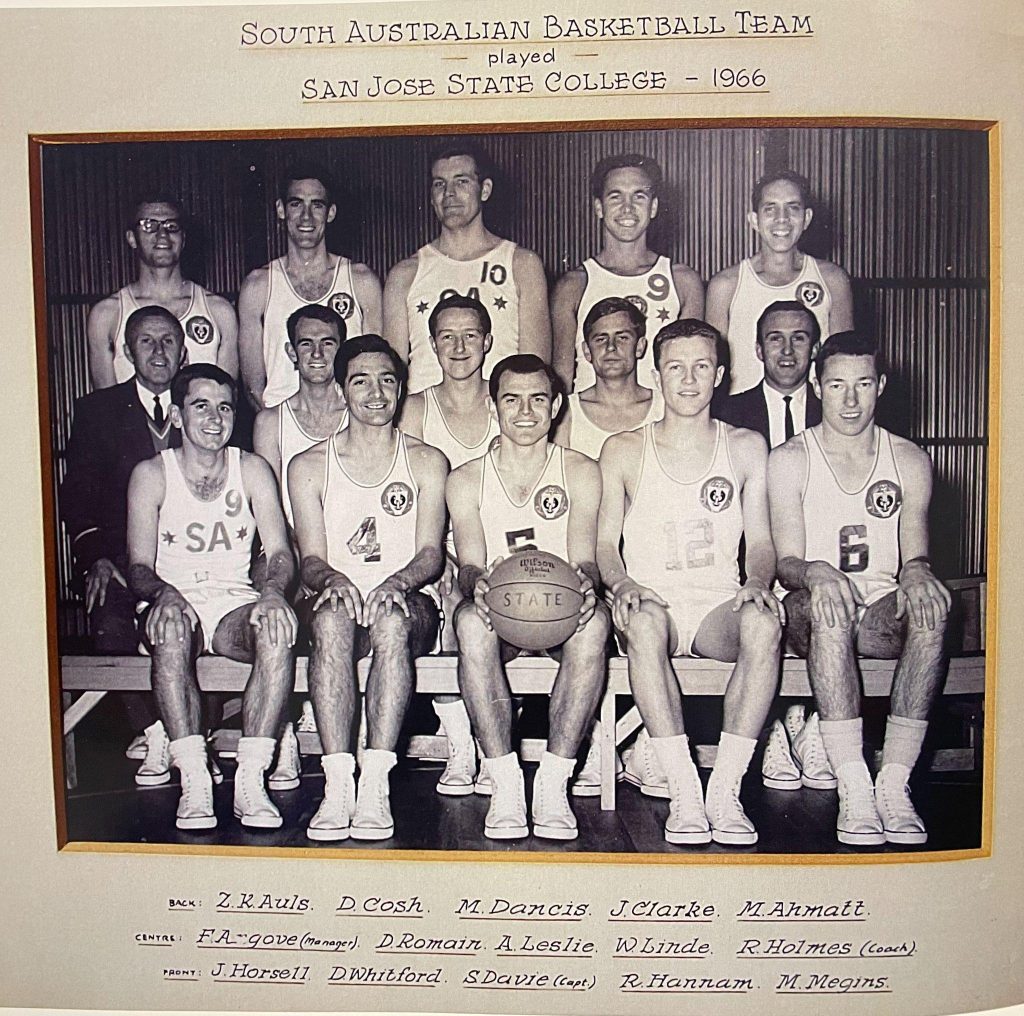
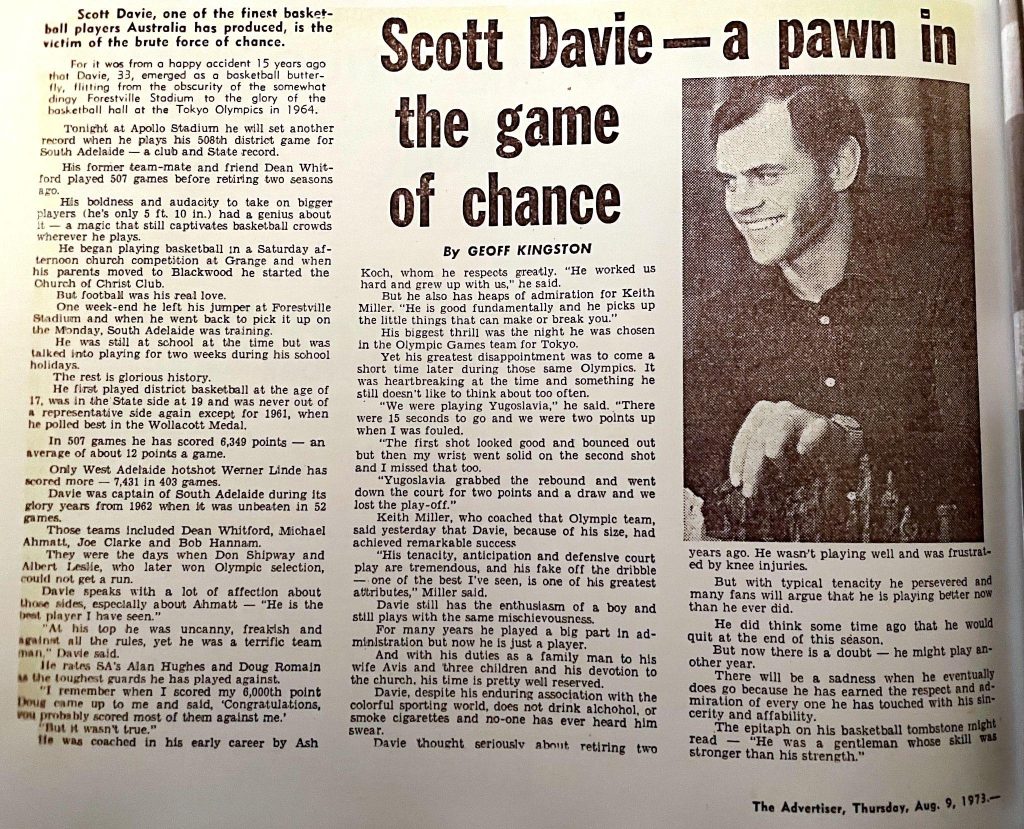
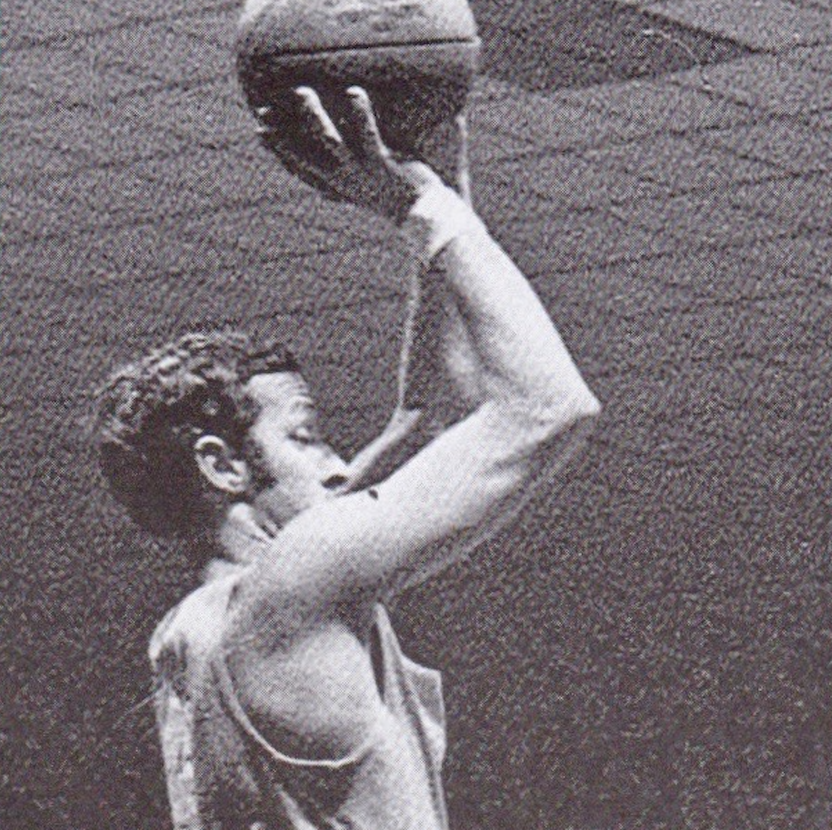
Scott Davie
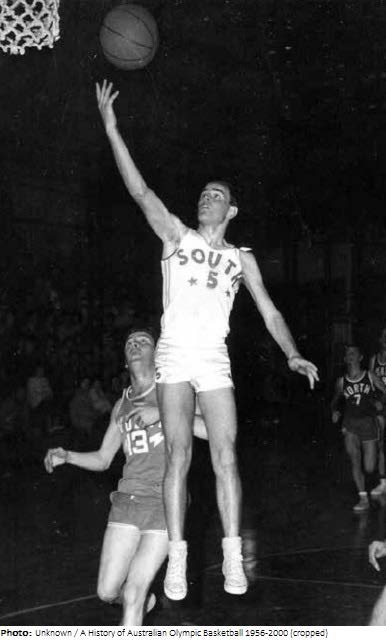
Born Theodore Lisle Scott Davie on 15 February 1940, Scott Davie is a living legend of the South Adelaide Basketball Club. His legacy to the sport in general means his imminent induction into the Basketball SA Hall of Fame long has been a foregone conclusion.
Launching his career as a high-scoring and energetic guard with Grange Christian Centre in 1951 in the Uniting Church Basketball Association, Scott remained true to his church basketball roots well after his many successes at state and international level with South Adelaide, South Australia and Australia.
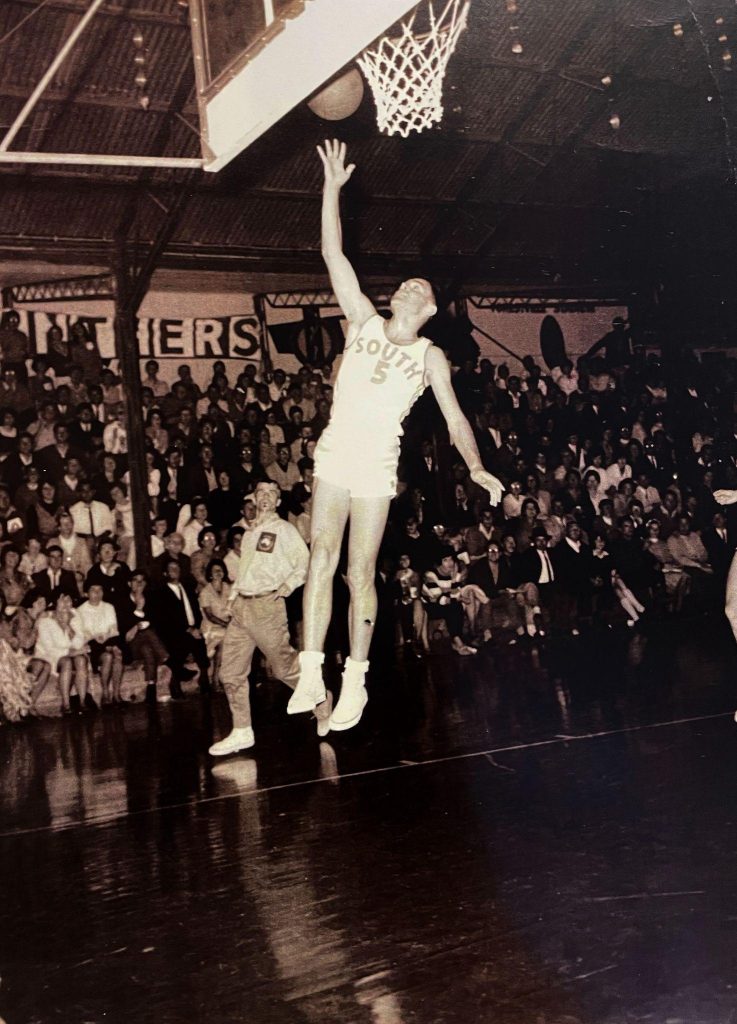
By 1957, Scott was playing at South Adelaide, elevated to the club’s top team in 1958 where his illustrious career with the Panthers would yield a (then) record 583 senior (or district) games, a record only surpassed by Hall of Famer and South teammate Michael Ahmatt with 588.
Scott is second too in career points scoring 6,349 points as a Panther, behind Hall of Fame legend Werner Linde.
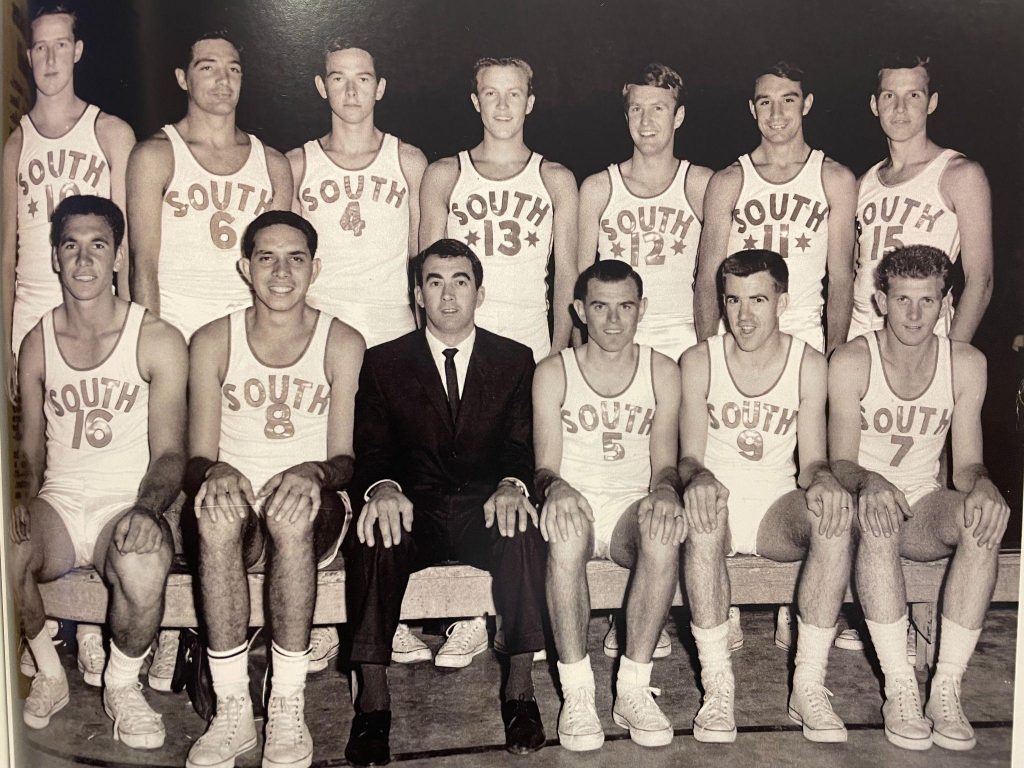
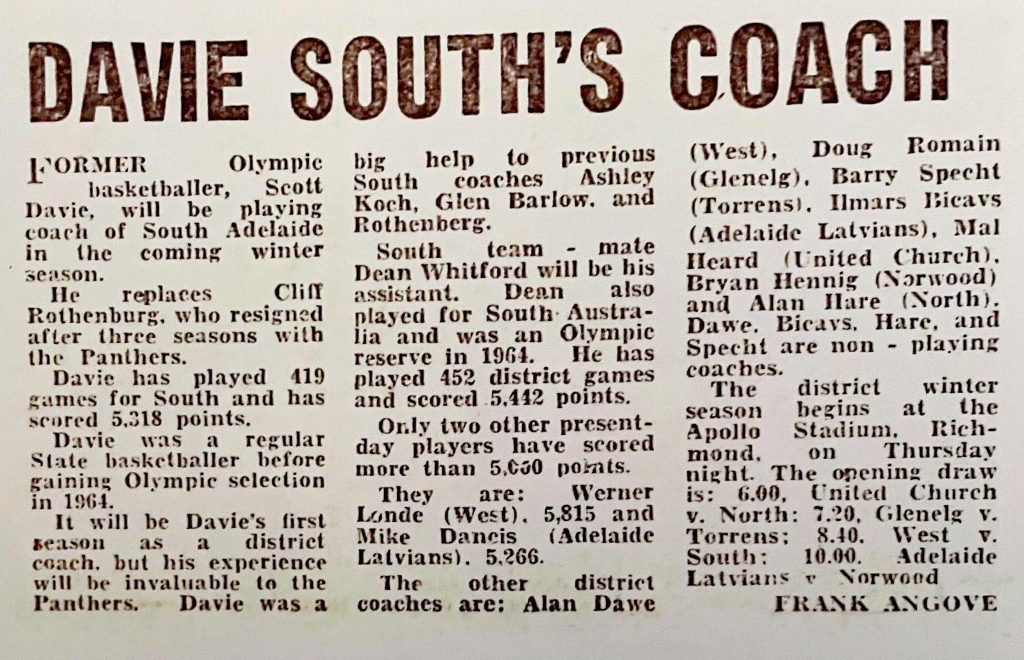
As South Adelaide captain from 1962 to 1972 – including a year as playing-coach in 1970 – he led the club through its “golden era” which included winning a record 52 consecutive matches from 1962.
Scott was instrumental in South Adelaide’s breakthrough inaugural championship in 1963 and subsequent state championship wins in 1965, 1966, 1969 and 1973 before his retirement.
Selected 10 times from 1959 to 1969, to represent South Australia at National States Championships, Scott was a key player in SA winning titles in 1959, 1960, 1963, 1964 and 1965 – five championships in a 10-year period.
He was South Australia’s captain in its 1965, 1966 and 1968 campaigns.
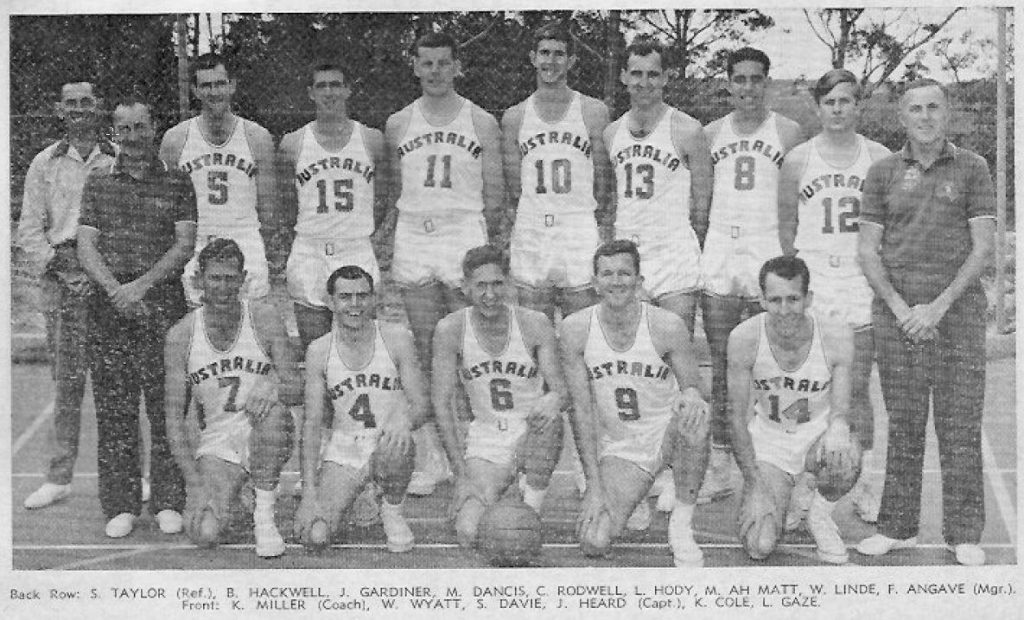
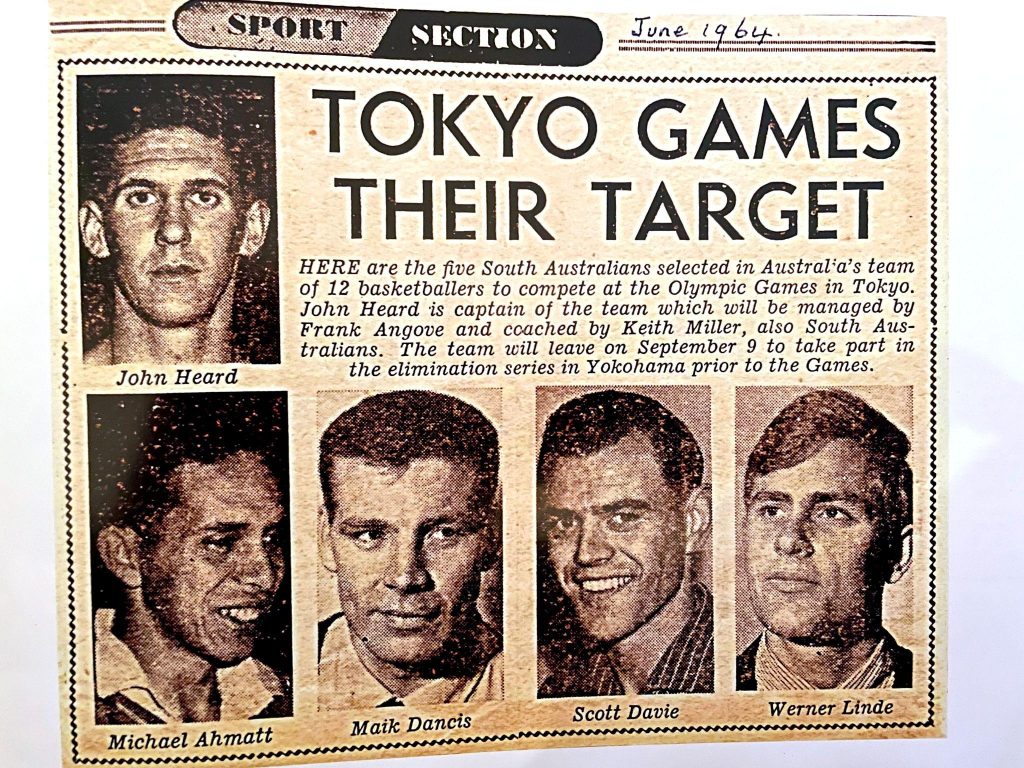
His performances at the 1964 Australian championship saw him selected for the Boomers’ landmark 1964 team which competed at the Tokyo Olympic Games.
It was no easy ride either as Australia’s part-timers won their way through the pre-Olympic qualifying tournament, then finished a very credible ninth at the Olympics.
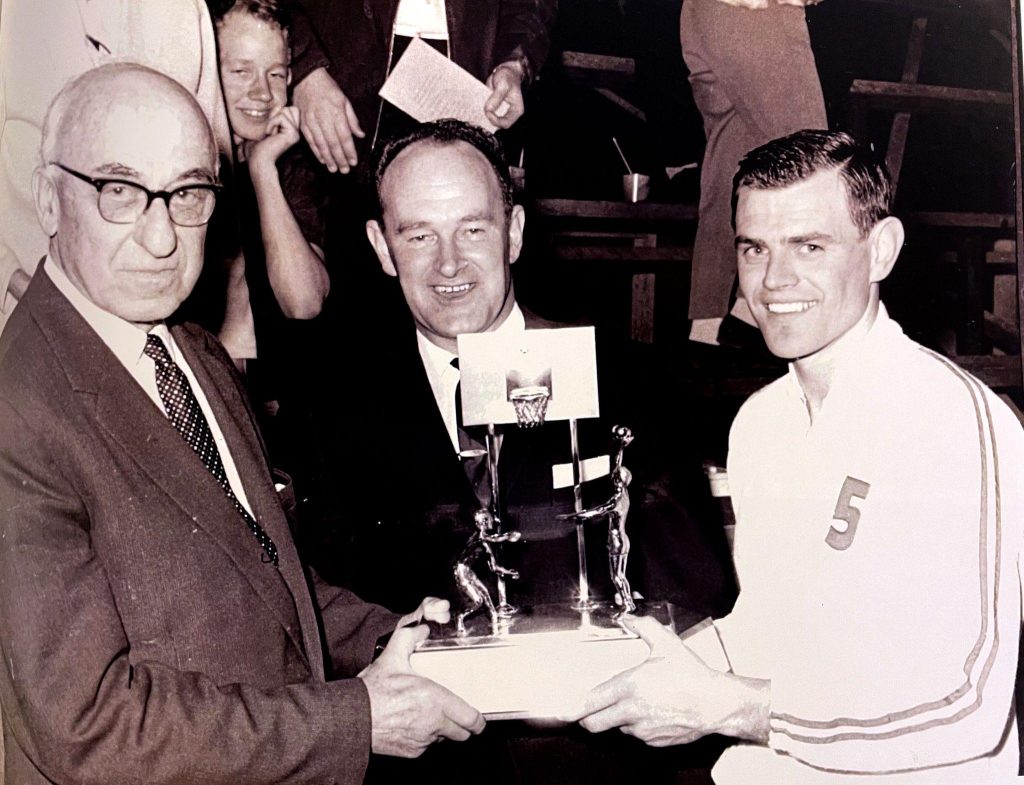
Additionally winning the Church of Christ Association’s best and fairest player award five times. Scott coached multiple Church Basketball teams, fostering the talents of South Australia’s youth, including fellow Hall of Famer and Olympian Darryl Pearce.
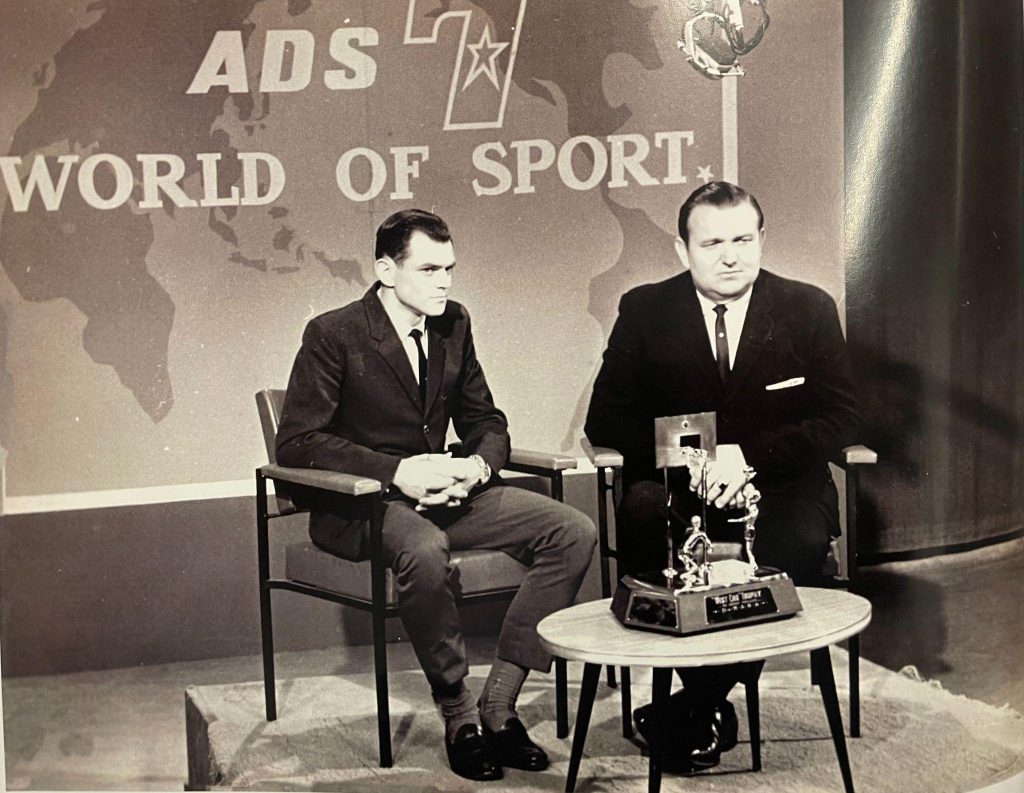
Post-playing days, Scott stayed involved at the highest levels as team chaplain of the Adelaide 36ers’ NBL team from 1992 to 2006.
South Adelaide retired his famous #5 uniform in honour of his extraordinary service and contribution to his beloved Panthers club and when the famed Apollo Stadium closed its doors after being Australia’s premier basketball venue from 1969 to 1992, Scott Davie was named in the top 10 men’s players to ever compete at the historic venue.